Quedlinburg: Germany’s Most Perfect Medieval Fairytale Town
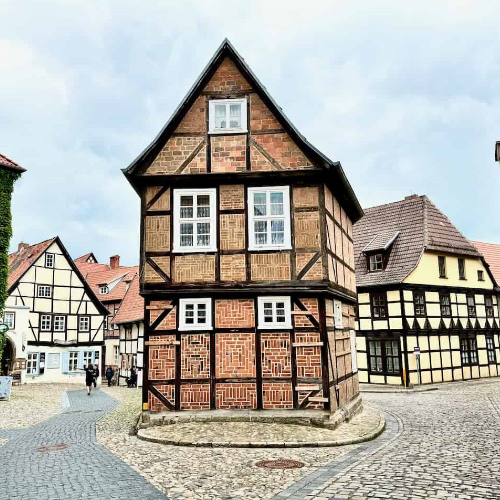
If one single place has come to symbolise the magic of Saxony-Anhalt, it is Quedlinburg. This tiny town of just 24,000 souls proudly owns the title of the best-preserved medieval and Renaissance town in all of Europe – and its UNESCO World Heritage listing since 1994 is backed up by an astonishing 1,300 colourful half-timbered houses spread over 90 hectares.
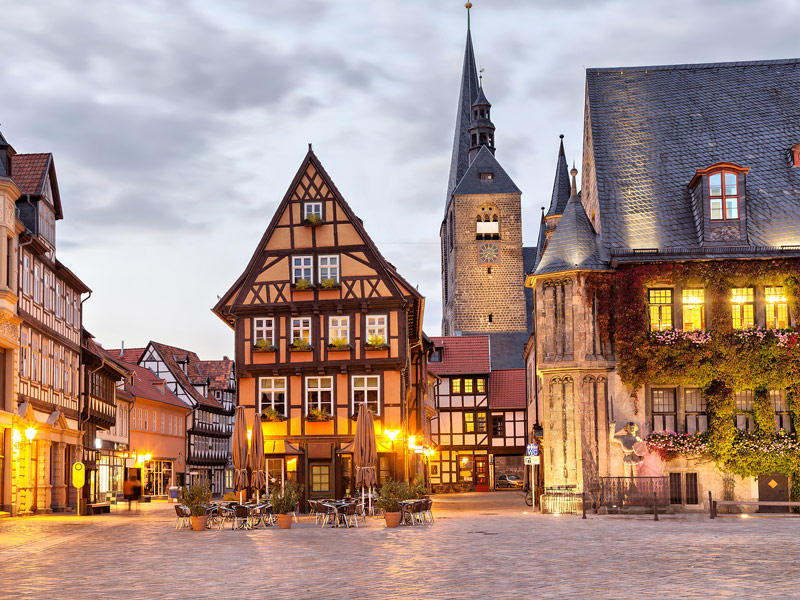
Walk the cobblestone streets and you’ll feel like you’ve stepped into a Brothers Grimm story: crooked gables, flower boxes, hidden courtyards, and the mighty Romanesque castle and collegiate church (Schatzhaus) towering on the hill. The market square, framed by the Renaissance town hall with its Roland statue, is regularly voted one of Germany’s most beautiful plazas.
The best light is golden hour, when the pastel façades glow and the castle hill turns pink. In December, Quedlinburg’s Advent market is pure magic: mulled wine served in hand-painted boots, medieval musicians, and 2 million fairy lights.
Practical tips
Arrive by regional train from Berlin (2½ hrs) or Leipzig (1½ hrs).
Stay overnight in one of the romantic timbered hotels – waking up before the day-trippers is priceless.
Climb the castle hill at sunrise (free) for the postcard panorama.
Take the 90-minute night-watchman tour in English (€12) – hilarious and atmospheric.
Quedlinburg isn’t just famous – it’s the place that makes even seasoned travellers whisper “this can’t be real”. Come once, and you’ll understand why it’s the undisputed queen of Saxony-Anhalt.
Additionally, you can conveniently discover a variety of captivating tourist destinations throughout Saxony-Anhalt(Sachsen-Anhalt) of GERMANY . – WTTD is thrilled to recommend top travel attractions for your next adventure! #WTTD
Naumburg Cathedral – Where Stone Statues Come Alive The 13th-century donor figures (especially smiling Uta) are so lifelike they feel like they might step off the wall. Pure Romanesque perfection and a UNESCO star. Tip: Book the 45-minute English tour (€8) – the guide brings the statues’ personalities to life. Spring concerts in the cathedral are goosebump-inducing.
Wittenberg – Where Martin Luther Changed the World Stand in front of the exact door where Luther nailed his 95 Theses in 1517. The Castle Church, Luther House and Melanchthon House are all UNESCO-listed. Tip: Download the free “Luther 1517” app for an augmented-reality tour. Finish with a Luther-Brot (spiced bread) from the bakery opposite the church.
Wörlitz Park – Germany’s Garden of Eden Europe’s first English landscape garden (1760s) with lakes, fake volcanoes, gondola rides and a mini Mount Vesuvius. Pure 18th-century romance. Tip: Rent a whispering boat (€12/hr) or cycle the 20 km of perfect paths – May rhododendrons and October foliage are unreal.
Bauhaus Dessau – The Building That Changed Modern Design Walter Gropius’ glass-and-concrete masterpiece – the most influential school of the 20th century. Walk inside the exact studios where Kandinsky and Klee taught. Tip: Take the 1-hour English guided tour (€9) and finish in the iconic canteen with Bauhaus coffee cups.
Luther’s House in Eisleben – Where Reformation Began and Ended Visit both the house where Luther was born and the room where he died – both UNESCO sites and surprisingly moving. Tip: Combo ticket €10 for both houses. The little museum café serves excellent Luther beer brewed to his own recipe.
Wernigerode Castle – The Real-Life Disney Castle A pastel-pink neo-Gothic dream perched above colourful half-timbered streets. Inside: 40 lavish rooms and panoramic Harz views. Tip: Ride the cute Brocken steam train from the town square straight to the castle gate (€15 return).
Brocken Mountain – Where Witches Dance Germany’s most legendary peak (1,141 m) – Goethe and witches’ legends. Ride the historic narrow-gauge steam train to the windy summit. Tip: Book the 7:45 am train from Wernigerode for sunrise on top – you’ll have the plateau almost to yourself.
Goslar & Rammelsberg Mines – 1,000 Years of Silver UNESCO-listed medieval town + the only mine in the world that operated for 1,000 years without interruption. Descend 1 km underground on rails! Tip: Mine tour + palace combo €18. In December, Goslar’s Christmas market is one of Germany’s coziest.
Magdeburg Cathedral – Germany’s Oldest Gothic Cathedral Begun in 1209, with 1,000-year-old Ottonian crypt. Next door, Hundertwasser’s crazy pink-green “Green Citadel” is pure Instagram joy. Tip: Climb the south tower (€5) for Elbe River views, then sip coffee inside the wavy Hundertwasser building.
Halle – Handel’s Hometown & Chocolate Heaven Birthplace of composer Georg Friedrich Handel. Visit his house, then devour the famous Halloren chocolate factory’s famous pralines (oldest in Germany). Tip: Free organ concerts in the Marktkirche where Handel played as a boy.
Freyburg & the Saale-Unstrut Wine Region Rolling vineyards, medieval castles and sparkling wine (Sekt) tasting in Germany’s northernmost quality wine region. Tip: Rent e-bikes in Naumburg and cycle the 30-km Saale Cycle Path – stop at tiny wineries for picnic wine.
Harz Quedlinburg Steam Train Ride Ride vintage steam trains through forests and over viaducts on the Selke Valley Railway – pure nostalgia. Tip: The “Hexenzug” (Witch Train) in April for Walpurgis Night is legendary.
Tangermünde – The Forgotten Red-Brick Gem Perfectly preserved medieval town on the Elbe with intact city walls, gates and a fairy-tale town hall. Tip: Walk the 1.5-km wall circuit at sunset – almost no tourists!
Köthen Castle & Bach Festival Where Johann Sebastian Bach wrote the Brandenburg Concertos. Every June the town hosts one of Europe’s best Bach festivals. Tip: Book a room in the castle itself (yes, really!) for a night with a genius.




Leave A Reply